Accurate leak location and dependable repairs for Brownsville homes and commercial properties. From hidden slab leaks and pinhole pipe failures to dripping supply lines behind walls — we find the source and fix it properly.
Water leaks in Brownsville properties often go undetected for weeks or months. The region's warm climate and high humidity can mask early symptoms while structural damage quietly accumulates beneath surfaces.
A sudden or gradual increase in your monthly water bill — without a corresponding change in your household routine — is one of the most reliable early indicators of a concealed leak. Even a small drip from a pressurized supply line can waste thousands of gallons over the course of a billing cycle, and Brownsville's municipal water rates make that waste increasingly expensive.
Persistent musty smells in bathrooms, kitchens, or utility areas often point to trapped moisture feeding mold colonies behind drywall or beneath flooring. In the subtropical Brownsville climate, mold can establish within 24 to 48 hours of moisture exposure, making prompt detection especially critical for both structural integrity and indoor air quality.
Warm or damp patches on tile, laminate, or concrete floors can signal a hot water supply leak running beneath the slab — a common issue in Brownsville properties where copper and CPVC lines pass through or under concrete foundations. Left unchecked, slab leaks can erode supporting soil and contribute to foundation settling or cracking.
Yellowish or brownish stains on walls and ceilings, bubbling paint, or warped baseboards indicate that water has migrated from a leaking pipe through building materials. Because water follows gravity and travels along framing members, the visible stain often appears some distance from the actual leak source.
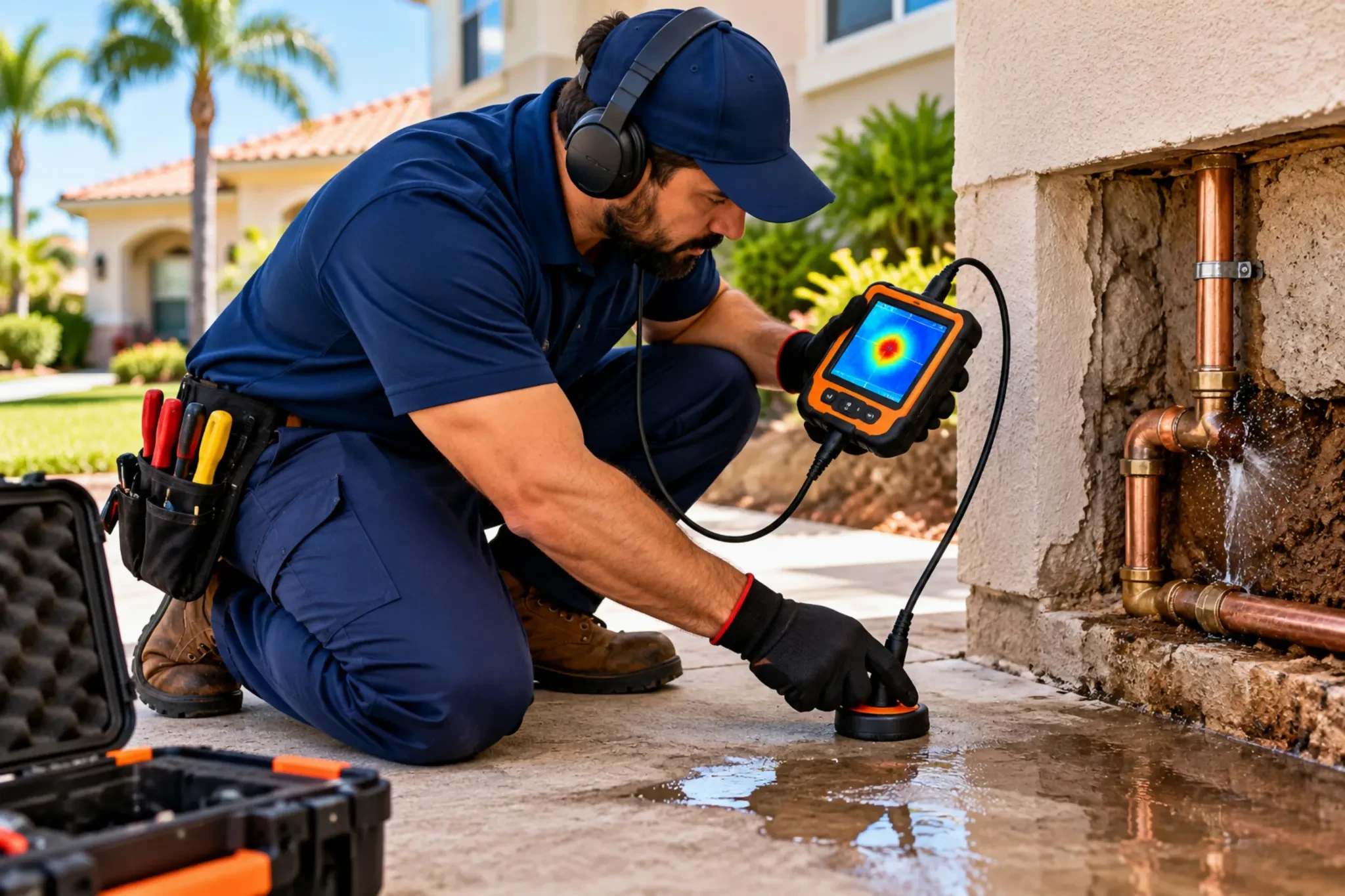
Finding the exact location of a hidden leak is the most important step in any repair. Our Brownsville plumbing team uses a combination of electronic leak detection equipment, acoustic listening devices, and thermal imaging technology to pinpoint leaks behind walls, under concrete slabs, and within ceiling assemblies — without unnecessary cutting or demolition.
Once the leak source is confirmed, we present you with clear repair options and transparent information about the scope of work involved. Whether the solution involves a targeted spot repair, pipe section replacement, or rerouting through accessible pathways, we focus on durable results that address the root cause rather than just the visible symptom.
Copper and CPVC supply lines running beneath concrete foundations are susceptible to corrosion, soil movement, and chemical reactions with the local groundwater composition. When a slab leak develops, water seeps upward through the concrete and can damage flooring, promote mold growth, and compromise structural stability. Our detection methods locate the precise failure point so repair can be targeted rather than exploratory.
Pressurized water supply lines behind walls and in utility spaces can develop pinhole leaks from internal corrosion, joint failures, or stress from thermal expansion. These leaks are often slow enough to go unnoticed until water damage becomes visible on finished surfaces. We use pressure isolation testing and acoustic detection to locate supply line failures accurately.
Worn washers, corroded valve seats, deteriorated supply hoses, and failing shut-off valves at sinks, toilets, and water heaters account for a significant portion of household leaks. While often less dramatic than concealed pipe failures, fixture leaks waste water continuously and can cause cabinet rot, subfloor damage, and elevated utility costs over time.
Underground irrigation lines, hose bibs, and outdoor supply connections are exposed to soil shifting, root intrusion, and temperature-related stress. A leak in an irrigation zone or outdoor supply line may not produce visible water indoors but will appear as unexplained water usage on your monthly bill. We extend our detection capabilities to exterior plumbing systems as well.
Contact our plumbing team to schedule a professional leak detection inspection. We serve residential and commercial properties throughout Brownsville and the surrounding Rio Grande Valley communities with accurate diagnostics and lasting repair solutions.